 +44 (0) 20 7127 5125
 Alumni Login
If you would like to discover more about coaching and training as a coach, do come along to one of our free upcoming virtual open events or webinars.
Share this article:


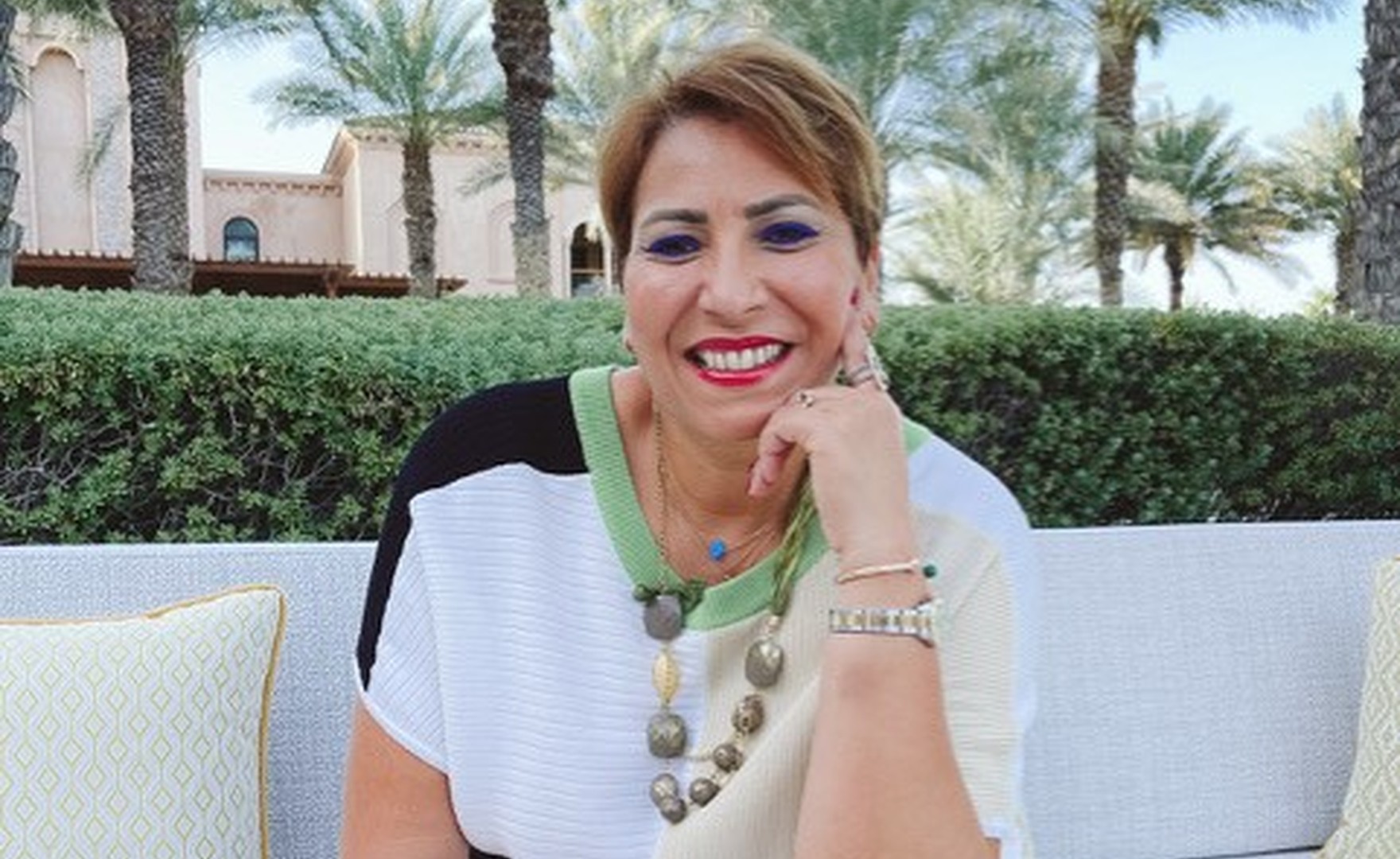
In this interview, we speak with Leila Rezaiguia, executive and systemic team coach, coach supervisor, author and co‑founder of Kompass – The Coaching Company. As head of AoEC UAE and faculty member on the Professional Practitioner Diploma in Executive Coaching, Leila reflects on her journey into coaching, the evolution of her holistic and systemic approach, and the influences that have shaped her work across cultures. Drawing on Western coaching models alongside Eastern and earth‑based wisdoms, she shares how her Spiral of Life philosophy informs her coaching, supervision and recently published book - and the professional legacy she hopes to leave behind.
Can you please tell us more about your professional background and who or what introduced you to the wonderful world of coaching?
When I saw this question, I thought, wow, that’s taken me back over two decades. My background is in learning and development and talent management within corporate environments. I started in oil and gas, working in graduate development and management, and then moved into government and financial services.
That’s really where my passion for developing people came from - developing careers, raising self‑awareness, and helping people move from one career to another. That naturally led me into coaching and mentoring, as these were initiatives I was designing for graduates, successors, high potentials and leaders in the organisations where I worked. That’s how I was first introduced to coaching.
I was also mentored by my father, who has had a massive impact on my career. Through working in HR and learning and development, I found myself mentoring and coaching, often without really understanding the difference between the two. This was around the early 2000s.
I moved to Dubai in 2009, where coaching became a significant part of my role - including sourcing external coaches and working with team coaching. That was when I decided to pursue formal accreditation. I realised it was time to properly learn about coaching, rather than coaching ad hoc and assuming I was doing it effectively.
At that point, I didn’t know much about formal coach training, so I researched providers and interviewed several organisations. I resonated with one that met my needs at the time, and that’s when I began my first coach training programme in 2011.
What was your own personal coach training journey?
When I look back at my training journey, I started with a company that specialised in brain‑based coaching. It was very cognitive and very results‑driven, which suited me at the time, as I was very results‑focused in my corporate role. That approach really spoke to me when I was selecting a provider. I liked that they had a clear model, that it was outcome‑focused and quite results focused. That’s how I was first formally introduced to coach training at ACC level. I then completed my hours for ACC and progressed on to PCC. From there, I decided to train further with the same provider in team coaching. I also met some wonderful people on both journeys.
At the time, I was doing my mentor coaching and client coaching over the phone. There was no Zoom, no Teams, nothing like that. We used to call them tele‑calls, and that’s how all the early coaching was done, regardless of where the client was. That experience really helped me sharpen my active listening skills.
Alongside this, because of the work I was doing in corporate - I was vice president of talent management, leadership development and succession planning, designing learning journeys and experiences - I became increasingly interested in systemic work. Before I encountered the AoEC, I completed ORSC, Organisation and Relationship Systems Coaching. That was a significant step in deepening my coach education around team coaching and systems, and it was my first real introduction to systems thinking.
At the same time, I was very clear from the beginning that I wanted to grow both personally and professionally. Not just through coach training and accreditation, but through my own personal development as well. I embarked on the CTI Leadership Journey, a year‑long programme in Spain. It was a hybrid programme, with in‑person retreats, and I completed it alongside ORSC.
Can you tell us about your own personal coaching model and what influences you most as a coach?
I had never thought about my own coaching model before meeting the AoEC in 2018, as I hadn’t originally trained with the AoEC. As I mentioned earlier, my early coaching was very brain‑based, and we were trained to follow a specific model. It wasn’t about who you are is how you coach - it was very much, this is the model and everyone follows it.
Because I had already done personal development work, ORSC and other training, meeting the AoEC was a turning point for me. When I was asked to design my own coaching model, I could see that things were no longer purely cognitive. The AoEC introduced me to creativity in coaching for the first time. Until then, I had no real experience of working creatively - it was all very brain‑based and rational.
I was saying to a friend the other day, after closing a piece of work with an executive client, that if I were to meet someone I coached 20 years ago, they would probably say, ‘Oh my God, is that the same coach?’ And the answer would be no - absolutely not.
Although I graduated as a coach in 2011, it wasn’t until 2018 that I designed my first coaching model. That’s when creativity became part of my work. Through my Gestalt training with John Leary-Joyce, my model strongly became Gestalt‑influenced, alongside other modalities such as NLP. Over time, I began to integrate spirituality and more holistic approaches as well.
When I look back at the coaching model I presented in 2018, I can see how much it has evolved. Today, it is far more holistic, creative and somatic.
In terms of what influences me most as a coach, Gestalt has a significant impact, particularly my focus on the here and now. My spiritual journey also influences my work, especially in how I hold space for another human being - sometimes that might be through a quote, reflection or written inquiry.
Somatics also informs a great deal of my coaching. Over the past five years, I’ve done extensive work around feminine embodiment and archetypes, and embodiment plays an important role in how I work with clients. I place a strong emphasis on building awareness of how clients connect with their bodies, always within appropriate boundaries and considerations.
You have gone onto be accredited with the ICF at PCC level and EMCC Global at Senior Practitioner level. Why was becoming accredited important to you and what value has it brought your practice?
Becoming accredited has been massively important to me. If I look back over my career, I have always been a specialist - in learning and development, talent management, and leadership development - and I strongly believe in mastering your craft.
When I decided to pursue coach training, I knew it was a long‑term journey. I wasn’t doing it simply to achieve ACC; I knew I was in this for the long run. For me, coach education without accreditation is only half the picture. Fifty per cent is the education, and fifty per cent is the accreditation. So, it was always obvious to me that I would continue working towards accreditation as part of my development.
That was important to me personally, but it also became even more important once I became faculty with the AoEC. It’s about leading by example. I’m working in a global organisation, training coaches and teaching about accreditation, so it’s only right that I hold myself to the same standards I expect of others.
Over time, I’ve also evolved as a coach. I’m no longer the very results‑driven person I once was when I first engaged with the ICF pathway. Becoming an accredited coach supervisor has had a significant influence on how I work and who I am as a practitioner, particularly from an EMCC perspective. That evolution is the reason I decided not to pursue MCC with the ICF and instead chose to progress towards EMCC Master Practitioner. It better reflects how I’ve developed as both a coach and a supervisor.
Accreditation has really helped to position me in my market, both regionally and globally, as a professional who works to the highest standards of the coaching profession. I often compare it to other fields - I wouldn’t go to a doctor or any other specialist who didn’t have the appropriate qualifications and professional standing. For me, accreditation brings credibility, demonstrates mastery of the craft, and provides quality assurance for clients.
So, its value is personal, professional, and commercial. It matters to me, it matters to the market, and, most importantly, it matters to my clients.
You lead a module on Crossing Cultures in the Professional Practitioner Diploma in Executive Coaching. What is it about this topic that particularly interests you?
I love this topic because it’s something I’ve always lived, not just something I teach. Crossing cultures isn’t simply a subject for me - it’s been a theme throughout my life.
I grew up on an American compound in Algeria, which meant I was immersed in a multicultural environment from a very young age. I then moved to England and lived in a similarly diverse setting, before relocating to Dubai, which is home to more than 200 nationalities. My work is global, and I coach and teach across cultures every day. I can quite literally sit at my desk and be working with people from anywhere in the world in one particular day.
This topic is very dear to my heart because it’s fundamentally about diversity, which is one of my core values. It’s about respecting diversity, appreciating it, and understanding the impact it has on who we are as human beings. Our education systems, religions, beliefs, communities and corporate environments all shape us in different ways, often without us realising it.
When I truly dive into this work with clients, it continues to fascinate me. It’s deeply multi‑layered, and what emerges when we co‑create a space through a cultural lens brings enormous richness and colour. It opens up conversations and insights that might otherwise remain unseen.
Personally, I couldn’t imagine living or working in a context where there is only a single way of seeing the world, with little or no diversity of perspective. While London felt very cosmopolitan to me, Dubai takes that to another level entirely. That’s where I feel most alive and at my best - both as a practitioner and in my work with clients.
That’s why this topic matters so much to me, and why I’m so passionate about bringing it into the coaching space.
In your own coaching work, who are you working with and what type of coaching services are you offering?
I work with clients across different cultures and industries. Typically, I work with senior leaders who are in transition - for example, moving from a VP to an SVP role, or from SVP into a CEO or COO position.
I also work extensively with senior executives who are part of leadership and executive development programmes where coaching is embedded into the overall design. In those contexts, coaching forms a core part of large‑scale leadership programmes, combining group coaching and one‑to‑one executive coaching. I do a lot of this type of work through my relationships with business schools, and that tends to be the model I work with most frequently.
Alongside this, I particularly enjoy working with senior female leaders in midlife, including those navigating perimenopause, menopause and post‑menopause, and exploring the impact these transitions can have on leadership. I also work with women experiencing life changes such as becoming empty nesters.
At the same time, I work with senior male executives who are thinking about transition in different ways - for example, early retirement, future life and career direction, or navigating complex personal situations such as living and working in different countries from their families.
Overall, the stage I’m at in my own life and career tends to attract clients who are in, or actively considering, significant transitions. Increasingly, this has become a central theme in my coaching work.
How do you think the role of coaching will develop in response to the future of work?
I currently coach across a large graduate programme, working closely with Gen Z as they enter the workplace. One of the key factors influencing whether they accept roles in the private sector is hybrid working. Many of these graduates are Emiratis, and for this generation it’s increasingly important to have flexibility. They are committed to their work, but they also place real value on having a life beyond it, and I genuinely respect that.
For me, the present and future of work will only unlock the full potential of employees if organisations embrace hybrid models. Coaching, in the same way, needs to be hybrid. That might include some face‑to‑face sessions, but it cannot be fully in‑person only. Personally, I now decline coaching programmes that are entirely face‑to‑face. I’m no longer in Dubai full‑time, and I no longer want to spend hours in traffic as I used to. I have changed and so has my practice. At this point, around 15 to 20 per cent of my coaching is hybrid, and 80 per cent virtual delivery and I love this model.
From a local and regional perspective, particularly with government clients, coaching is still very much delivered in-person and at times hybrid. However, even there, with congestion and sustainability considerations, I sense a gradual move towards more hybrid or virtual approaches.
That said, I’m also seeing a contrasting trend in some organisations. Through conversations with clients, I see many companies - particularly multinationals - bringing people back into the office five days a week. If I’m completely honest, that feels like a more controlling, less trust‑based model of work, where presence is equated with productivity.
When it comes to AI, I welcome it as a powerful support tool. Functions such as transcription, session summaries, feedback forms, scheduling, and identifying themes can save a significant amount of time, assuming there is trust and agreement with the client. If AI can help map supervision or mentoring sessions against competencies, I would absolutely embrace that, as it would free up time and cognitive load.
However, the essence of coaching - the human energy between two people - cannot be replaced by AI. The ability to sense when to pause, when to go deeper, or when something is landing emotionally cannot be fully captured by technology. That level of presence and attunement remains uniquely human.
You have published your first book, The Spiral of Life: Journey Through Nature's Wisdom and Cycles. What inspired you to write this book, and what do you hope readers will take away from it?
The inspiration for the book came while I was completing a 12‑month EMCC Practitioner Diploma in Creativity called Cultivating and Choreographing the Rich Tapestry of Whole hearted Creativity, which explored how to choreograph and fully embody creativity. During that programme, I was introduced to the concept of the five seasons through Eastern philosophy, and that was genuinely mind‑blowing for me.
As I moved through my own creative and personal journey during the programme, I could feel that something was wanting to be born. I became deeply drawn to the idea of the seasons, and as part of the course we were required to present a final project. My project became the skeleton of a book - a reflection on my own journey through what I describe as the spiral of life.
A particular focus for me was understanding how I bring myself into alignment with the seasons: how I know when I am grounded in a season, and how I recognise when I am not. That’s where the image of the spiral came from. For me, we are all moving through the spiral of life every day. But if we keep repeating the same patterns - especially those that no longer serve us - without being anchored, we can end up stuck, like being on a hamster wheel. I reached a point where I knew I was done with that. Turning 50 in 2025 marked a significant transition for me.
That’s why I added an anchor to the spiral in the book’s imagery. The spiral represents movement and cycles, while the anchor represents grounding, ease and flow. The book is a reflection of my personal journey - how I brought myself back into alignment with the seasons, and what happened when I wasn’t anchored within them.
I wanted the book to be experienced as a journey rather than something to read from cover to cover. It’s structured around the five seasons and written as a reflective journal. I share practices, offer questions to sit with - perhaps over a cup of tea - and invite readers to journal. There are also reflective cards with quotes, encouraging pause, contemplation and deeper thought.
My intention was for this book to support coaches, coach educators, supervisors, mentors and leaders who value ongoing reflective practice. In many ways, it’s the coming together of my passion for creativity and my commitment to supervision and reflective work. Those two strands really gave birth to this book.
Above all, I hope readers take away an invitation to pause, reflect, slow down and practise self‑care - something that feels more important than ever in the frantic world we’re living in.
Looking back, what advice would you give yourself when you were starting out as a coach?
If I were to give myself advice when I was starting out as a coach, I think it would be to choose a coaching programme that was the complete opposite of who I was at the time.
Back then, I was drawn to programmes that fitted with how I already thought and worked - what felt familiar, comfortable and aligned with who I was. While that made sense at the time, I can see now that I would have benefited from choosing a programme that pushed me much further out of my comfort zone from the start.
Coaching is not meant to be comfortable - and I didn’t fully understand that then. If I had known, I would have chosen a programme that challenged not just my thinking, but my way of being. The training I did was excellent in stretching my thinking, but it didn’t fundamentally challenge who I was as a practitioner.
That’s the advice I would give myself: choose a path that unsettles you, that confronts you, and that invites deeper personal transformation - because that’s where the real learning in coaching begins.
What would you like your professional legacy to be?
For me, this is both a personal and a professional legacy. What I would like to leave behind is the idea of continually feeding, nourishing and nurturing your soul.
Who you are is how you lead. Who you are is how you coach. And who you are is how you supervise. That inner work really matters.
I also believe very strongly that if you choose to do something, then commit to it fully and master it. Don’t do things half‑heartedly. Go all in.
And finally, have fun along the way. Enjoy the journey. Be yourself. Life - and work - are far too boring without joy, curiosity and a sense of play. That, ultimately, is the legacy I would love to leave.
Our deepest gratitude to Leila for sharing her expertise and insights into coach training.
If you would like to learn more with Leila, she facilitates the module ‘Crossing Cultures' on our Professional Practitioner Diploma
News
AoEC appoints Virginia Molet to head Spanish launch
20th March 2026 by Lee Robertson
The Academy of Executive Coaching (AoEC) is delighted to announce the appointment of Virginia Molet, founder of Gravitae Academy, as…
Interview
Practitioner Diploma / “There is true power in presence”
20th March 2026 by Lee Robertson
Kofi Kyei is a people centred talent and culture specialist with deep experience partnering with blue chip organisations across commerce…
Article
How organisations can help their employees look inwards and learn about themselves
20th March 2026 by Rochelle Trow
Organisations say they want resilient, grounded leaders who can navigate complexity without burning out. Yet the structures they reward still…