 +44 (0) 20 7127 5125
 Alumni Login
If you would like to discover more about coaching and training as a coach, do come along to one of our free upcoming virtual open events or webinars.
Professional Practitioner Diploma / “The PPD challenges you to elevate your practice”
18th August by Lee Robertson
Reading time 7 minutes
Share this article:


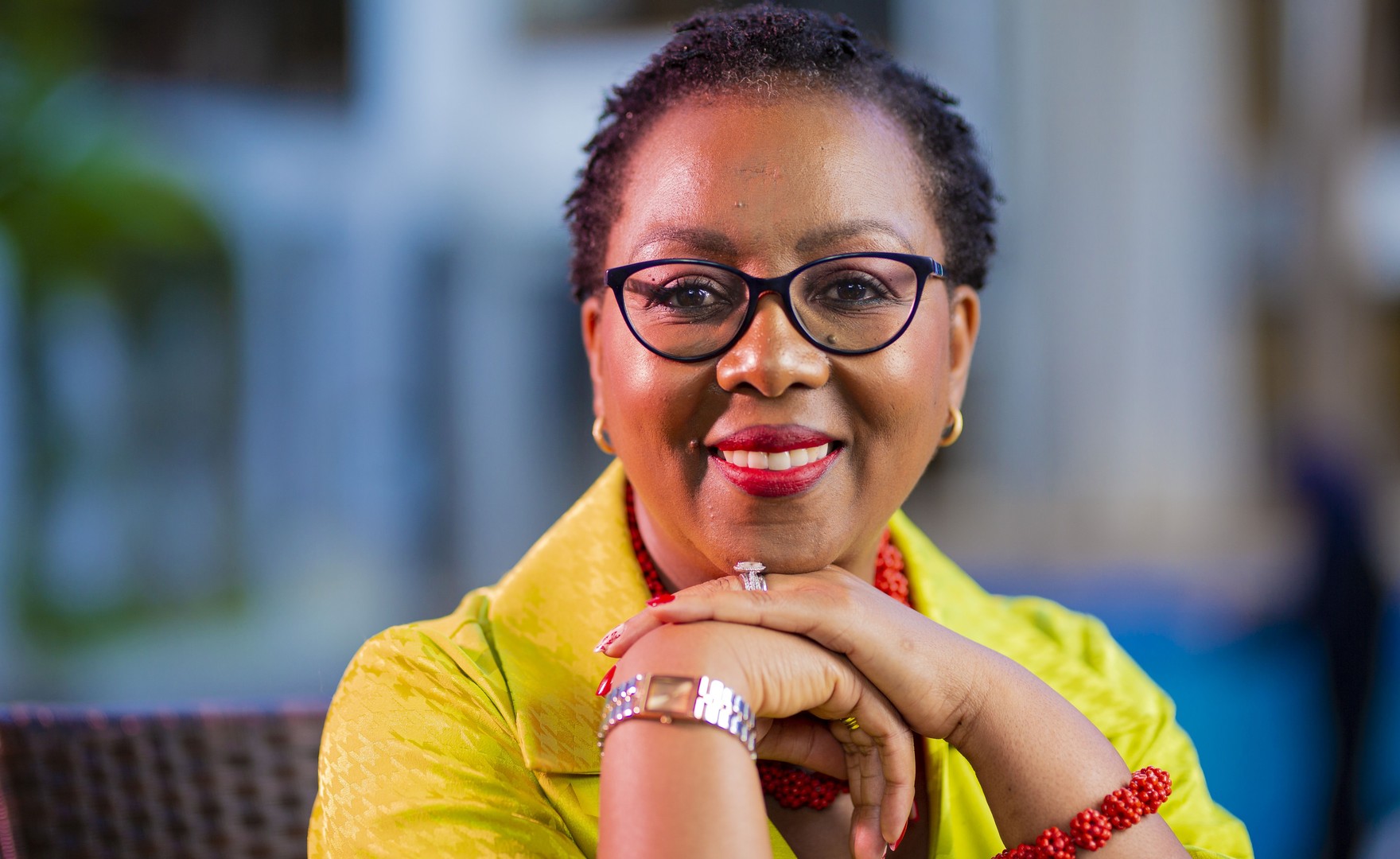
Susan Banda-Mudiwa is an executive coach, leadership development consultant and former CEO with more than two decades of leadership experience across Southern Africa. Founder of Yukani Consulting, she supports senior executives, emerging leaders and entrepreneurs to unlock their potential and lead with greater self-awareness, purpose and impact. In this interview, Susan shares her experience of the AoEC's Professional Practitioner Diploma in Executive Coaching, reflecting on the personal and professional growth it inspired, the power of systemic and Ubuntu coaching, and why she believes the programme challenges coaches to truly elevate their practice.
With more than 20 years' leadership experience - including as CEO of a large enterprise, and in strategy development, project execution, and strategic communications - who or what introduced you to coaching and inspired you to train with AoEC East Africa?
In 2018, we relocated to Kenya as a family, and that transition became a turning point for me. Before the move, I had been working with a coach of my own to think through my next step after leaving my previous position. Around the same time, I completed a few coaching certifications, including with Franklin Covey and the Nancy Kline programmes, which gave me an early foundation.
Once we had settled in Nairobi, a friend who is an AoEC Faculty member told me about the Practitioner Diploma Programme run by Career Connections. Learning what the programme offered, I made the decision to train as a coach - partly because I had experienced the value of coaching for myself, and partly because coaching aligned so closely with my values, particularly service to others. In hindsight, I also realised that much of the work I had already been doing with my team in my previous role had been coaching, even if I hadn't called it that at the time.
You originally did the Practitioner Diploma in Executive Coaching in 2018. What prompted you to pursue further training with the Professional Practitioner Diploma in Executive Coaching, and how did you know it was the right time for you to take this next step?
I was working towards my PCC credential, and the Professional Practitioner Diploma offered a clear pathway to that goal. What drew me in further was the inclusion of supervision and mentoring, which gave me space to really interrogate my practice and my own coaching model. My supervisor encouraged me to go for it - and here I am.
There was another pull, too: I would be part of the first cohort from East Africa to undertake the Professional Practitioner Diploma, and we were all women. That mattered to me.
What were some of the positives and challenges you experienced while doing the Professional Practitioner Diploma?
So many positives. The diversity of the cohort coming from all over the world and the diversity of experience, and how we supported one another, stood out immediately, as did the diversity of the faculty and the depth of the curriculum. It was the right fit for me - it gave me the theoretical frameworks alongside real opportunities to put them into practice. Gestalt coaching, in particular, makes far more sense to me now.
There weren't many challenges. The main one was timing - fitting the length and pace of the various modules around everything else - but that became easier once we found our rhythm as a cohort.
How would you describe the transition from the Practitioner Diploma to the Professional Practitioner Diploma in terms of complexity and depth of learning?
For me, the transition was really about “being” a coach and interrogating that through deep self-reflection. The Practitioner Diploma laid the foundation - the models, the mechanics of how to coach. The Professional Practitioner Diploma takes it a step further, asking how you are coaching, and offering a much deeper dive into practice and ethics than the PD addresses. Because you arrive at the PPD after coaching for a number of years, you bring a fuller knowledge and awareness with you, which made the experience richer and deeper for me.
The sessions on systemic coaching and systems thinking, Ubuntu coaching, and Gestalt were particularly interesting, and shifted how I think about complexity and how my clients experience it. I now bring systems thinking into my coaching sessions in a way I didn't after the PD.
In what ways has the Professional Practitioner Diploma equipped you with new tools or perspectives that you didn't gain from the Practitioner Diploma? How do these new insights elevate your coaching practice?
Every module in the PPD enriched my coaching and expanded the basket of tools and skills available to me. In practice, I now focus not only on my clients' needs but also reflect far more deliberately on how I am coaching. In some ways, after the PD, I was focused on “doing” coaching; after the PPD, I am “being” a coach.
The skills that stand out most are seeing the client not only as a whole person but as part of a wider system and staying curious about how they interact within it; becoming more comfortable leaning into somatic and Gestalt approaches; and understanding that my coaching model can shift and expand session to session, depending on what the client needs.
Looking back, what advice would you give to someone considering moving from the Practitioner Diploma to the Professional Practitioner Diploma? What should they prepare for in terms of personal and professional growth?
Be prepared for growth - and for some discomfort as you let go of past practices and behaviours, and as your coaching is challenged. It is a lot of work, both in engaging with the modules and the material, and in engaging with yourself. The reflections, and the sessions with your supervisor and mentor coaches, will push you to show up fully and be honest with yourself about how you are showing up as a coach. On the personal growth side, the PPD challenges you to elevate your practice, to engage differently with your clients and in service of them, and, ultimately, to become a better coach.
What elements of the Professional Practitioner Diploma's modules particularly resonated with you and why?
The systemic coaching and Ubuntu coaching modules, and the discussions around identity resonated most strongly with me, because they reflect how I already understand leadership in African contexts - as something relational and interconnected, rather than purely individual. Gestalt coaching was a close second: learning to work with what is present in the room, in the body and in the relationship, rather than only with what the client reports verbally, has genuinely changed how I show up in sessions. Together, these modules gave me language and frameworks for something I had long sensed intuitively about coaching within community and systems, and that has made my practice feel far more integrated.
You have gone on to be an ICF-certified executive coach. Why was becoming credentialled important to you and what value has it brought your practice?
Credentialling mattered to me because it signals a genuine commitment to my own growth and development as a coach. It also signals to the industry and the market that I am dedicated to elevating my craft, and that I hold myself to a defined standard and Code of Ethics.
The PPD itself gave me new frameworks to draw on in my coaching. Just as valuable were the relationships within my cohort - the peer coaching, supervision, and mentor coaching all deepened my self-awareness as a coach and shaped how I show up more meaningfully and impactfully for my clients. I continue to engage in peer coaching and supervision with some of those coaches that were in my cohort.
You established Yukani Consulting in 2018. Who do you typically coach and what are the issues or opportunities you normally support them with?
My clients come from a range of sectors and sit at different stages of leadership within their organisations - C-suite executives, and executive and middle management. They represent finance, banking, health, entrepreneurship, and the development and humanitarian sectors, among others.
The issues they bring to coaching typically include executive presence, strategic leadership, leadership transitions, leading through complexity, self-awareness, stakeholder influence, decision-making, communication, team leadership, team dynamics, change leadership, values alignment, performance growth, and business leadership.
Can you share a success story or testimonial from one of your clients that highlights the impact of your coaching?
“I found my coaching conversations with Sue immensely useful in helping me navigate a mid-life/mid-career transition. Her insightful questions and observations helped me gain clarity around my personal and professional goals and my values, and guided me in considering different perspectives, as well as in framing my thoughts within a broad context encompassing ideas of identity and purpose. Some of the tools and techniques employed continue to serve me well outside the coaching context.”
— Senior advocate, banking sector, Nairobi, Kenya
What do you find most rewarding about your work as a coach?
What I find most rewarding is watching a client move from feeling stuck to seeing real clarity and possibility - and knowing that I played a part in creating the space for that shift. I'm especially energised by my work with women in leadership across Africa, including in specialised fields like health, where representation and visibility still lag behind. Being part of someone's journey to step more fully into their leadership, and to carry that confidence forward into how they lead their teams and organisations, is deeply meaningful to me. It's also a continual reminder of why I moved into coaching in the first place - service to others.
Our deepest gratitude to Susan for sharing her personal journey and experience of coach training at the AoEC.
Article
The rise of the workplace situationship and what it means for leaders
18th August 2026 by Lee Robertson
A new workplace trend is emerging, and it should give leaders pause for thought.
Interview
In conversation with Sarah Carrington
18th August 2026 by Lee Robertson
As Sarah Carrington says goodbye to the AoEC after 18 years, we take the opportunity to look back on an…
Interview
Professional Practitioner Diploma / “The PPD challenges you to elevate your practice”
18th August 2026 by Lee Robertson
Susan Banda-Mudiwa is an executive coach, leadership development consultant and former CEO with more than two decades of leadership experience…