 +44 (0) 20 7127 5125
 Alumni Login
If you would like to discover more about coaching and training as a coach, do come along to one of our free upcoming virtual open events or webinars.
“The Professional Practitioner Diploma is not simply the next course after the Practitioner Diploma“
21st July by Lee Robertson
Reading time 10 minutes
Share this article:


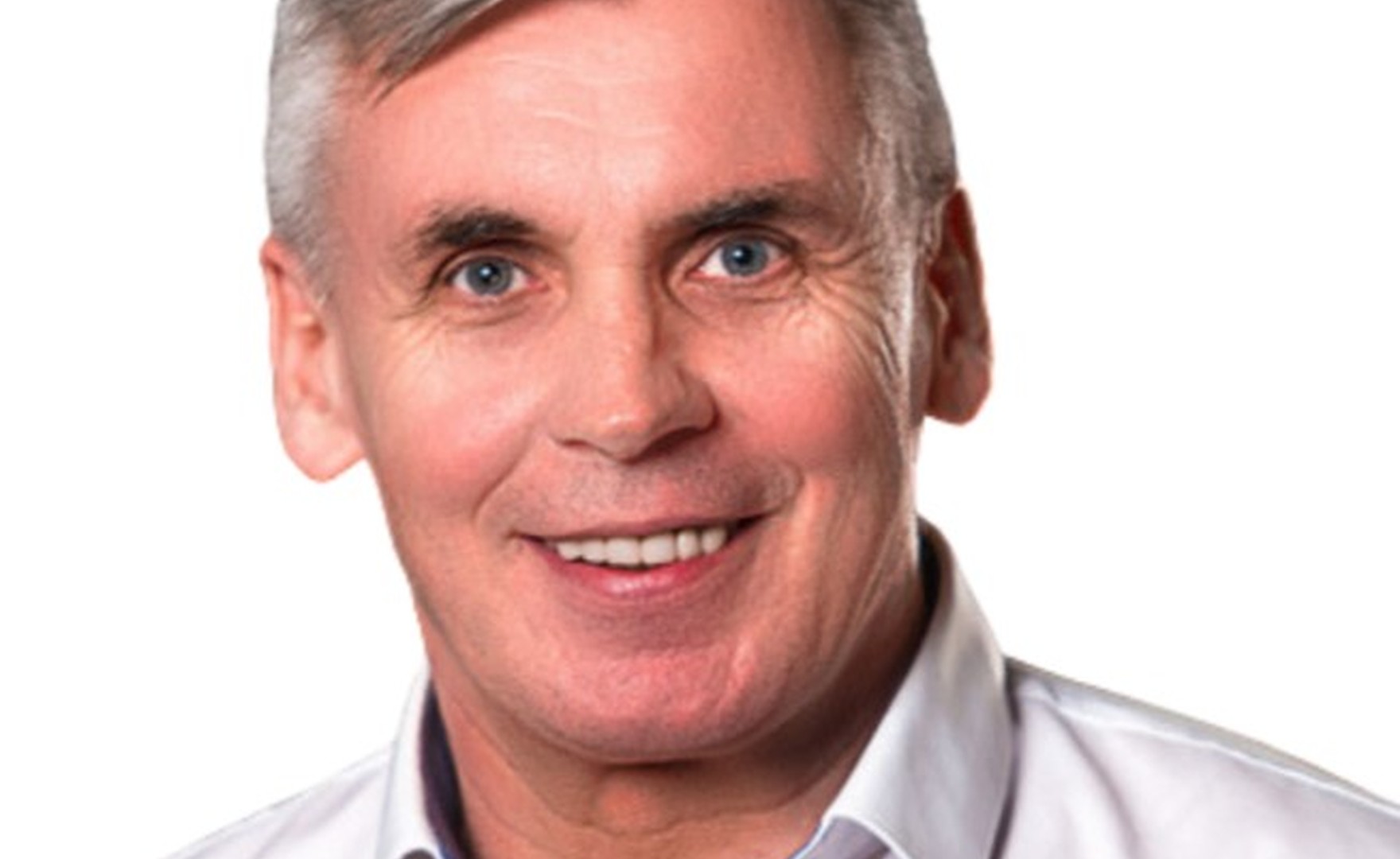
Toomas Soosaar is a leadership and growth coach focused on helping executive teams turn strategy into measurable results. With more than 25 years of senior leadership experience across manufacturing and infrastructure, including roles at ABB, Eesti Energia and ETK Sisustus, he brings a pragmatic, results-driven perspective to coaching. Today, he works closely with CEOs, entrepreneurs and leadership teams to build clarity, alignment and accountability at the top of organisations. In this interview, Toomas reflects on his journey through the AoEC’s Professional Practitioner Diploma in Executive Coaching and how it has deepened his approach to leadership, performance and coaching practice.
You have over 25 years of working as an executive manager in various industrial and manufacturing companies. Who or what introduced you to coaching and led to you signing up for coach training with the AoEC in Estonia?
My journey towards coaching began while I was still working as a senior executive. I had spent many years leading companies and teams, and I became increasingly aware that business results do not depend only on strategy, processes or finances. They depend very strongly on people, on the maturity of the leadership team and on how leaders are able to create clarity, responsibility and self-confidence in others.
My first personal experience of coaching was more than ten years ago, during a leadership project where I was offered the opportunity to work with a personal coach. At that time, I did not fully understand what coaching really was, but I experienced very clearly how powerful a conversation can be when someone does not give you advice, but instead helps you create clarity in your own thinking through the right questions.
Later, I participated in an international mentoring programme where my mentor used a very coaching-oriented approach. Those regular conversations helped me see coaching not only as a tool for personal development, but also as a very practical leadership tool. From that point, I would say I became a believer in coaching.
The AoEC’s Practitioner Diploma in Executive Coaching was a natural next step for me. I did not originally join the programme with the intention of becoming a professional coach. I joined because I wanted to become a better leader, a better developer of people and to understand more deeply how to help people find their own inner resources, knowledge and strength.
You originally did the Practitioner Diploma in Executive Coaching in 2017. What prompted you to pursue further training with the Professional Practitioner Diploma in Executive Coaching, and how did you know it was the right time for you to take this next step?
When I completed the Practitioner Diploma in 2017, I still identified mainly as a leader. Coaching was a very important skill and framework for me to use in leadership. I already had a strong belief that people are capable of development when the right environment is created for them, when there is clarity and when they are supported with the right questions.
Over the years, however, coaching became much more central in my life and work. After finishing my executive career, I began working full-time in leadership coaching and consulting. Today, I mainly work with entrepreneurs, CEOs and leadership teams, helping them increase team performance, strengthen leadership culture and improve their organisation’s ability to execute.
At some point, I felt that I needed to rethink my identity as a coach. I had a lot of practical experience, but I wanted to go deeper: not only to structure conversations better, but to be more present, to understand the whole person and to develop myself to the next level as a professional coach.
The Professional Practitioner Diploma came at exactly the right time in my life. If the Practitioner Diploma gave me the foundation for coaching, the Professional Practitioner Diploma helped me understand more clearly what kind of coach I really am and who I want to become.
What were some of the positives and challenges you experienced while doing the Professional Practitioner Diploma?
The most positive aspect for me was the depth of the programme. It was not simply about learning new tools. It was a very personal and professional development journey. During the programme I repeatedly had to look at myself: at my presence, my assumptions, where I move too quickly towards solutions and how I can trust the client and the process more as a coach.
The peer coaching and mentor coaching sessions were also extremely valuable. They gave me the opportunity to test my approach in practice, receive feedback and notice patterns that are not always visible in everyday work.
The biggest challenge was my own natural results orientation. As a leader, I have been used to moving towards solutions and action. During the programme, I learned even more to pause, to listen, to hold the space and not to rush towards answers on behalf of the client. As a coach, my role is not to be the smartest person in the room. My role is to help the client see themselves, their situation and their possibilities more clearly.
How would you describe the transition from the Practitioner Diploma to the Professional Practitioner Diploma in terms of complexity and depth of learning?
The Practitioner Diploma was a very practical beginning for me. It gave me structure, language and initial confidence in using coaching. My coaching model at that time was strongly connected with leadership, results and finding solutions. It worked well for business and leadership-related topics.
The Professional Practitioner Diploma took me much deeper. It was no longer only about how to structure a conversation or help a client reach a solution. It was about how to be truly present, how to coach the person rather than the problem, and how to notice emotions, body language, meaning, identity and the system in which the person operates.
For me, the biggest shift was moving the focus from the problem to the person. Previously, I could unconsciously move too quickly towards solving the problem. The PPD helped me understand more deeply that very often the client does not first need a solution, but clarity about themselves, their state, their wishes and their choices.
I did not give up results or practicality, because they are still an important part of who I am. But more presence, more space, more curiosity and more trust in the client’s own wisdom were added to my practice.
In what ways has the Professional Practitioner Diploma equipped you with new tools or perspectives that you didn’t gain from the Practitioner Diploma? How do these new insights elevate your coaching practice?
One of the most important perspectives was understanding coaching as a deeply human and systemic dialogue. Today’s leaders operate in complex systems. Their challenges are very rarely only technical or rational. Strategy, relationships, roles, uncertainty, responsibility, identity and emotions are often all present at the same time.
The PPD helped me develop my ability to be more present with the whole person, not only with their business or leadership challenge. I was particularly influenced by the themes of psychological safety, Gestalt, identity and culture, self-compassion and Ubuntu coaching. All of these helped me understand more clearly how important it is to see the client as a whole person.
The most practical change was reflected in my own coaching model. During the programme, I articulated my coaching model: Relationship, State, Aim, System and Steps.
First, it is important to create a relationship based on trust. Then to understand the client’s current state and the topic they want to explore. After that, we agree on the aim of the conversation, where the client wants to get to. Then, through systemic listening, reflection and questioning, we move towards deeper clarity and possible solutions. Finally, the client defines the steps they choose to take.
For me, this model is simple enough to use in real practice and deep enough not to become a mechanical tool. It helps me hold both structure and humanity in the coaching conversation.
Looking back, what advice would you give to someone considering moving from the Practitioner Diploma to the Professional Practitioner Diploma? What should they prepare for in terms of personal and professional growth?
My advice would be to enter the programme not only in search of new tools, but with a readiness to change yourself. The Professional Practitioner Diploma is not simply the next course after the Practitioner Diploma. It is a much deeper development journey.
You should be prepared for the programme to raise very personal questions: Who am I as a coach? What are my assumptions? When do I want to help too quickly? Where do I not fully trust the process?
It is also important to be prepared for the workload. Reading, reflection, practice, peer coaching, mentor coaching and thinking through your own model all require time and real presence.
My advice would be: do not go into the programme only looking for better questions. Go there to become a better listener, a better thinking partner and a more mature human being.
What elements of the Professional Practitioner Diploma’s modules particularly resonated with you and why?
Several modules resonated with me, but I would particularly highlight three.
The first was psychological safety and holding the space. I have always considered trust to be very important, but this module helped me understand more clearly how to create trust and safety consciously. If a person does not feel safe, they cannot be fully honest, open or vulnerable.
The second was the Gestalt approach and working beyond words. It helped me become better at noticing emotions, body language, pauses, shifts in energy and those moments when something genuinely moves for the client. As someone with a strongly rational and systemic background, this was a very valuable area of development for me.
The third was self-compassion and Ubuntu coaching. The idea of Ubuntu - seeing another person with respect and dignity, as a connected human being- resonated with me very deeply. It fits very naturally with my own values. I believe that as a coach it is essential to approach people with respect, to see them as capable and whole, and not to reduce them to the problem they currently want to solve.
You founded your own practice in 2018. Who do you typically coach and what are the issues or opportunities you normally support them with?
Today, I describe myself as a leadership and growth coach and work closely with company named Empowerment. My typical clients are entrepreneurs, CEOs and leadership teams, often from industrial, manufacturing, construction, infrastructure and technology companies.
The focus of my work is increasing the performance of leaders and leadership teams. I strongly believe that the speed and sustainability of a company’s development depend on the maturity, collaboration and execution capability of its leadership team. That is why I often work not only with one leader, but with the whole leadership team.
The topics clients usually bring are related to growth, focus, role clarity, accountability, leadership rhythm, team collaboration and strategy execution. Often, the company has the ambition, but the system for executing it does not work well enough. Leaders are busy, there are many meetings, but decisions do not move into action quickly enough. Or the team may consist of good people, but roles, expectations and accountability are not clear enough.
My role is to help the leader and the team create more clarity, focus, discipline and freedom. I would say that my work is not only about helping the leader think better. It is about helping the leader and their team act better.
Can you share a success story or testimonial from one of your clients that highlights the impact of your coaching?
One example that describes the impact of my work well is related to a CEO who had a clear ambition for growth, but where the company’s leadership depended too much on his own personal involvement and constant operational presence.
At first, it seemed that the main question was about processes and goals. During our work together, however, it became clear that the real issue was the functioning of the leadership team: role clarity, distribution of responsibility, decision-making rhythm and trust.
As a result of our collaboration, the roles in the leadership team became clearer, common priorities were agreed, a regular leadership rhythm was created and goals and key results started to be followed more systematically. For the CEO, one of the most important changes was that he no longer had to push every decision through personally. The team began to take more responsibility and the organisation became less dependent on him.
In moments like this, I see very clearly the combined impact of coaching and a functioning leadership system. When the leader changes, the team changes. When the team changes, the culture of the organisation changes. And when the culture changes, the results change too.
What do you find most rewarding about your work as a coach?
The most rewarding moment is when a person understands themselves or their situation in a new way. It does not always have to be a big or dramatic moment. Sometimes it is simply a pause, a silence or a sentence such as: “I think I now understand what is really going on here.”
I enjoy seeing confusion turn into clarity. A leader may come into a conversation with several open thoughts, concerns or tensions and leave with greater calm and a clearer choice. Even more, I enjoy when clarity leads to action. I strongly believe that thinking and talking are not enough on their own. Change happens when a person chooses to do something differently.
As a coach, it is a great privilege to be a thinking partner for someone at a moment when they are searching for new clarity, courage or direction. This is especially meaningful when working with leaders, because a leader’s development does not influence only the leader. It influences their team, the culture of the organisation and often many other people.
If I had to summarise the purpose of my work in one sentence, I would say: I help leaders and leadership teams create clarity, grow accountability and move towards their desired results in a way that allows people themselves to grow in the process.
Our sincerest thanks to Toomas for sharing his personal journey and experience of coach training at the AoEC.
Article
The rise of the workplace situationship and what it means for leaders
18th August 2026 by Lee Robertson
A new workplace trend is emerging, and it should give leaders pause for thought.
Interview
In conversation with Sarah Carrington
18th August 2026 by Lee Robertson
As Sarah Carrington says goodbye to the AoEC after 18 years, we take the opportunity to look back on an…
Interview
Professional Practitioner Diploma / “The PPD challenges you to elevate your practice”
18th August 2026 by Lee Robertson
Susan Banda-Mudiwa is an executive coach, leadership development consultant and former CEO with more than two decades of leadership experience…